
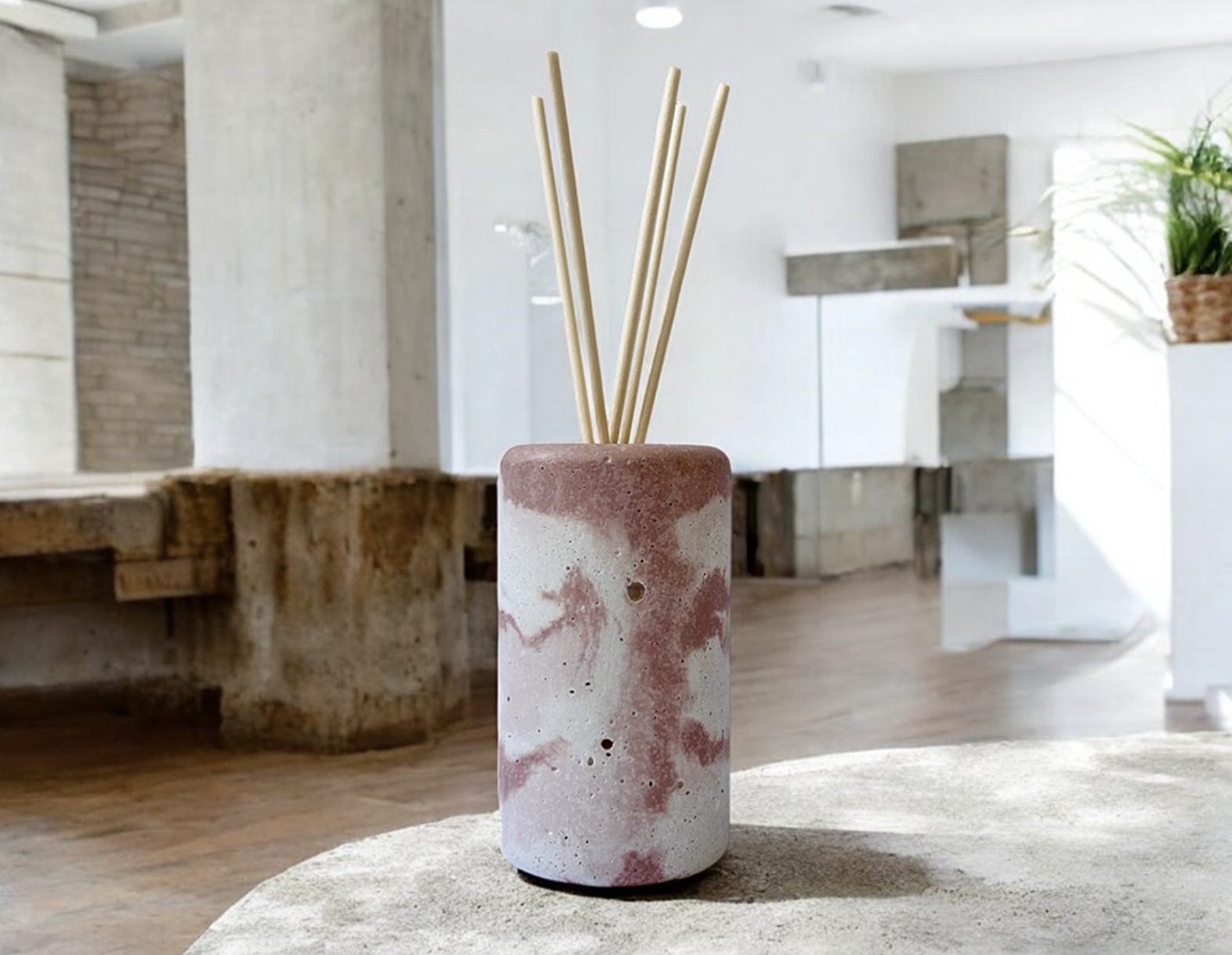
Decorative cement pieces have gained prominence in contemporary decor. They possess an artisanal, modern, and timeless character, making them perfect for adding personality to any space. Whether in their natural version, in classic gray cement, or in colored versions with iron oxide pigments, these pieces offer countless possibilities for combining colors, textures, and patterns.
If you want to learn how to create harmonious and stylish environments using cement pieces, this article is for you.
The charm of cement in decoration.
Cement is an extremely versatile material and adapts to various decorating styles, such as:
- minimalist
- industrial
- Scandinavian
- contemporary boho
- modern rustic
Its raw and elegant aesthetic serves as a neutral base, allowing other colors and prints to stand out.
Gray cement pieces: neutrality and sophistication
Gray cement is the ideal starting point for any design. It acts as a balancing tone, bringing serenity and structure to the space.
How to use it in decoration:
- Combine it with light wood for a more welcoming result.
- Use with black or gold metals for a modern touch.
- Opt for natural fabrics (linen, raw cotton) to soften the overall look.
Pieces like lamps, vases, or organizers made of gray cement become versatile and timeless elements.
Pigmented cement with iron oxide: color with natural elegance.
Iron oxide is a mineral pigment widely used to color cement, creating sophisticated shades such as:
- terracotta
- burnt red
- mustard
- brown
- soft pinks and oranges
These colors bring warmth and character, without losing the natural and organic aesthetic of cement.
Important tip:
Pigmented pieces look especially beautiful when used as focal points, in small decorative details.
How to combine gray cement and colored cement
The mix between neutral gray and pigmented earthy tones is one of the most elegant and contemporary combinations.
1. Rule of balance: neutral + emphasis
- Base: gray cement
- Highlight: one or two colored pieces
Example: a gray tray with a terracotta jar and a beige candle.
2. Opt for color palettes inspired by nature.
Iron oxide tones combine beautifully with natural colors, such as:
- sand
- pearl white
- olive green
- caramel
- matte black
This color palette creates warm, sophisticated, and welcoming environments.
3. Mix textures to enhance the cement.
Cement has a matte and slightly porous finish, making it even more interesting when contrasted with other materials.
- wood
- glazed ceramic
- glass
- natural fibers (straw, rattan)
- stone
This combination adds depth and visual richness to the space.
How to combine prints with cement pieces
Many people associate cement only with minimalist environments, but the truth is that it also works very well with patterns and prints — as long as there is balance.
1. Geometric patterns + cement
Cement has a modern aesthetic, so it combines naturally with geometric patterns:
- stripes
- chess
- abstract forms
- terrazzo
You can incorporate them into cushions, rugs, or picture frames.
2. Boho style and organic patterns
For a more relaxed and welcoming decor, combine pigmented cement with soft prints:
- foliage
- ethnic reasons
- handcrafted textures
The contrast between the rough and the delicate results in a very balanced environment.
3. Minimalism: few prints and neutral tones
If you prefer a cleaner look:
- Let the cement be the star.
- choose discreet patterns
- Keep a color palette with gray, beige, and soft terracotta.
Few elements, but impactful.
In conclusion: cement is both foundation and personality at the same time.
Cement pieces, whether gray or peppered with iron oxide, are perfect for creating a modern, natural decor full of character. The secret is to balance colors, combine patterns sparingly, and explore textures that enhance the material.
Whether used in small details or as a main feature, cement adds authenticity and a very special handcrafted touch to the home.